Buy europesname.eu ?
We are moving the project
europesname.eu .
Are you interested in purchasing the domain
europesname.eu ?
domain@kv-gmbh.de · 0541-91531010
Buy europesname.eu ?
What is a sediment or what are sediments?
Sediments are particles of organic or inorganic material that accumulate over time through the process of erosion, weathering, and deposition. These particles can include sand, silt, clay, and gravel, and they settle at the bottom of bodies of water or on land surfaces. Sediments play a crucial role in the formation of sedimentary rocks and can provide valuable information about Earth's history and past environments through the study of sedimentary layers. **
How does the carbon cycle work in relation to sediments and fossil fuels?
The carbon cycle involves the movement of carbon through the Earth's atmosphere, oceans, and land. When plants and animals die, their organic matter can become buried in sediments. Over time, this organic matter can be transformed into fossil fuels, such as coal, oil, and natural gas, through the process of sedimentation and pressure. When these fossil fuels are burned for energy, carbon that was once stored in the Earth's crust is released back into the atmosphere as carbon dioxide, contributing to the greenhouse effect and climate change. Therefore, the carbon cycle is closely linked to the formation and use of sediments and fossil fuels. **
Similar search terms for Sediments
Top-Angebote
Products related to Sediments:
-
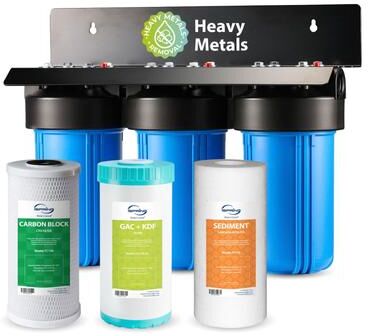
iSpring F3WGB31BKS Whole House Water Filter Replacement Pack, Reduces Heavy Metals, Lead, Hydrogen Sulfide, Chlorine, SedimentsReliable 3-Stage Whole House Water Filter – This whole house water filter repleacement set includes a 10” x 4.5” sediment filter (FP15B), a GAC KDF compound filter (FG15B-KS), and a high-quality carbon block filter (FC15B) to effectively reduce...164,99 $*Shipping: 0,00 $Secure redirect to the provider
-
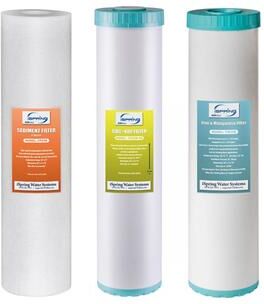
iSpring F3WGB32BMKS 4.5” x 20”, Sediments, Chlorine, Hydrogen Sulfide, PFAS, Heavy Metals, Iron, Manganese, Fits WGB32B-MKSAdvanced Water Filtration Technology: Our whole house water filter pack incorporates three specialized filters for comprehensive water purification. The first-stage polypropylene sediment filter (FP25B) captures particles as small as 5 microns.204,69 $*Shipping: 0,00 $Secure redirect to the provider
-
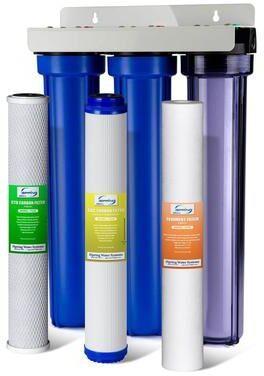
iSpring WCB32C-GAC 3-Stage Whole House Water Filtration System, Reduces Chloramine, PFAS, Chlorine, Sediments, 5-MicronComplete Home Filtration: Our advanced 3-stage whole house water filter system ensures thorough water purification for your entire home, covering every tap, shower, laundry, and dishwasher. Experience unmatched clarity in every drop.183,99 $*Shipping: 0,00 $Secure redirect to the provider
-
iSpring WCB32CKS 3-Stage Heavy Metals Whole House Water Filter System, Reduces Lead, Chloramine, PFAS, Chlorine, SedimentsGAC and KDF Filtration Excellence: Our second-stage GAC and KDF composite filter effectively removes a wide range of contaminants, including chlorine, PFAS, lead, radon, chloramine, and H2S.249,39 $*Shipping: 0,00 $Secure redirect to the provider


-
What does Cuban cuisine and eating culture look like?
Cuban cuisine is a fusion of Spanish, African, and Caribbean influences, resulting in a diverse and flavorful culinary tradition. Common ingredients include rice, beans, plantains, and various meats such as pork and chicken. Popular dishes include ropa vieja (shredded beef), arroz con pollo (chicken with rice), and lechón asado (roast pork). Eating culture in Cuba is centered around family and community, with meals often being a social and communal experience. It is common for Cubans to share meals with extended family and friends, and food is an important part of social gatherings and celebrations. **
-
What are electricity and high culture history?
Electricity history refers to the development and use of electricity as a form of energy, including the discovery of electricity, the invention of electric devices, and the establishment of electrical systems. High culture history, on the other hand, refers to the history of cultural and artistic achievements that are considered to be of high quality and sophistication, such as classical music, literature, fine arts, and theater. Both electricity and high culture history have evolved over time, shaping the way we live and appreciate the world around us. **
-
What is the difference between low culture and high culture in history?
Low culture refers to the cultural activities and products that are considered to be more common, popular, and easily accessible to the general public. This can include things like popular music, television shows, and mass-produced literature. On the other hand, high culture refers to the cultural activities and products that are considered to be more refined, sophisticated, and often associated with the elite or educated classes. This can include things like classical music, fine art, and literature that is considered to be more intellectually challenging. The distinction between low and high culture has been a source of debate and has evolved over time, but it generally reflects the social and class divisions within a society. **
-
Does anyone know about the Islamic Golden Age in architecture and culture?
Yes, the Islamic Golden Age was a period of great cultural and architectural achievements in the Islamic world, spanning from the 8th to the 14th century. During this time, Islamic scholars made significant advancements in fields such as mathematics, astronomy, medicine, and philosophy. In terms of architecture, the Islamic world produced stunning examples of mosques, palaces, and other structures, characterized by intricate geometric patterns, domes, and arches. This period also saw the development of beautiful decorative arts such as calligraphy, ceramics, and textiles. Overall, the Islamic Golden Age left a lasting legacy in both architecture and culture. **

What are examples of natural landscapes and cultural landscapes?
Examples of natural landscapes include mountains, forests, deserts, beaches, and rivers. These landscapes are shaped by natural processes such as erosion, weathering, and tectonic activity. On the other hand, cultural landscapes are areas that have been influenced or shaped by human activity, such as cities, agricultural lands, parks, and historic sites. These landscapes reflect the interaction between humans and their environment over time. **
What is a question about the history of Romanesque architecture?
How did Romanesque architecture evolve from the earlier Carolingian and Byzantine styles? **
Top-Angebote
Products related to Sediments:
-
iSpring WGB31B-KS Whole House Water Filter System, Reduces Heavy Metals, Lead, Chlorine, Chloramine, Sediments"Reliable 3-Stage Whole House Water Filtration – This whole house water filter system features a 10"" x 4.5"" sediment filter, a GAC KDF compound filter, and a high-quality carbon block filter to effectively reduce sediments, chlorine, heavy metals,…"305,03 $*Shipping: 0,00 $Secure redirect to the provider
-
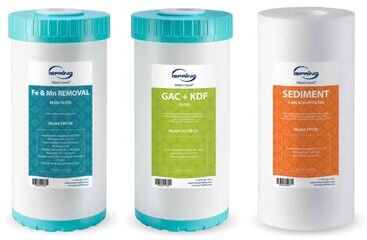
iSpring F3WGB31BMKS Whole House Water Filter Pack, Reduces Iron, Manganese, Hydrogen Sulfide, Lead, Chlorine, SedimentsReliable Whole House Water Filtration – F3WGB31BMKS whole house water filter replacement pack includes a 10” x 4.5” sediment filter, a GAC and KDF compound filter, and an iron filter to tackle sediments, chlorine, heavy metals, hydrogen sulfide,...143,77 $*Shipping: 0,00 $Secure redirect to the provider
-
iSpring F3WGB31BKS Whole House Water Filter Replacement Pack, Reduces Heavy Metals, Lead, Hydrogen Sulfide, Chlorine, SedimentsReliable 3-Stage Whole House Water Filter – This whole house water filter repleacement set includes a 10” x 4.5” sediment filter (FP15B), a GAC KDF compound filter (FG15B-KS), and a high-quality carbon block filter (FC15B) to effectively reduce...164,99 $*Shipping: 0,00 $Secure redirect to the provider
-
iSpring F3WGB32BMKS 4.5” x 20”, Sediments, Chlorine, Hydrogen Sulfide, PFAS, Heavy Metals, Iron, Manganese, Fits WGB32B-MKSAdvanced Water Filtration Technology: Our whole house water filter pack incorporates three specialized filters for comprehensive water purification. The first-stage polypropylene sediment filter (FP25B) captures particles as small as 5 microns.204,69 $*Shipping: 0,00 $Secure redirect to the provider
-
What is a sediment or what are sediments?
Sediments are particles of organic or inorganic material that accumulate over time through the process of erosion, weathering, and deposition. These particles can include sand, silt, clay, and gravel, and they settle at the bottom of bodies of water or on land surfaces. Sediments play a crucial role in the formation of sedimentary rocks and can provide valuable information about Earth's history and past environments through the study of sedimentary layers. **
-
How does the carbon cycle work in relation to sediments and fossil fuels?
The carbon cycle involves the movement of carbon through the Earth's atmosphere, oceans, and land. When plants and animals die, their organic matter can become buried in sediments. Over time, this organic matter can be transformed into fossil fuels, such as coal, oil, and natural gas, through the process of sedimentation and pressure. When these fossil fuels are burned for energy, carbon that was once stored in the Earth's crust is released back into the atmosphere as carbon dioxide, contributing to the greenhouse effect and climate change. Therefore, the carbon cycle is closely linked to the formation and use of sediments and fossil fuels. **
-
What does Cuban cuisine and eating culture look like?
Cuban cuisine is a fusion of Spanish, African, and Caribbean influences, resulting in a diverse and flavorful culinary tradition. Common ingredients include rice, beans, plantains, and various meats such as pork and chicken. Popular dishes include ropa vieja (shredded beef), arroz con pollo (chicken with rice), and lechón asado (roast pork). Eating culture in Cuba is centered around family and community, with meals often being a social and communal experience. It is common for Cubans to share meals with extended family and friends, and food is an important part of social gatherings and celebrations. **
-
What are electricity and high culture history?
Electricity history refers to the development and use of electricity as a form of energy, including the discovery of electricity, the invention of electric devices, and the establishment of electrical systems. High culture history, on the other hand, refers to the history of cultural and artistic achievements that are considered to be of high quality and sophistication, such as classical music, literature, fine arts, and theater. Both electricity and high culture history have evolved over time, shaping the way we live and appreciate the world around us. **
Similar search terms for Sediments
-
iSpring WCB32C-GAC 3-Stage Whole House Water Filtration System, Reduces Chloramine, PFAS, Chlorine, Sediments, 5-MicronComplete Home Filtration: Our advanced 3-stage whole house water filter system ensures thorough water purification for your entire home, covering every tap, shower, laundry, and dishwasher. Experience unmatched clarity in every drop.183,99 $*Shipping: 0,00 $Secure redirect to the provider
-
iSpring WCB32CKS 3-Stage Heavy Metals Whole House Water Filter System, Reduces Lead, Chloramine, PFAS, Chlorine, SedimentsGAC and KDF Filtration Excellence: Our second-stage GAC and KDF composite filter effectively removes a wide range of contaminants, including chlorine, PFAS, lead, radon, chloramine, and H2S.249,39 $*Shipping: 0,00 $Secure redirect to the provider
-
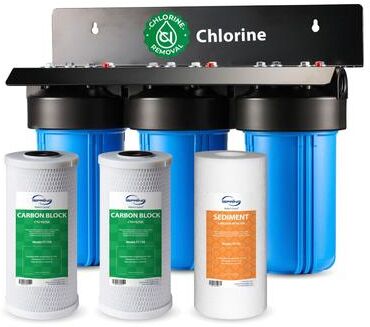
iSpring WGB31B Whole House Water Filter System, Reduces up to 99% Chlorine, Sediments, Taste, Odor, 3-Stage"Powerful 3-Stage Filtration – The iSpring WGB31B whole house water filtration system includes a 10"" x 4.5"" sediment filter and two CTO carbon block filters - removing up to 99% of chlorine, along with sediments, rust, tastes, odors, herbicides, and..."288,11 $*Shipping: 0,00 $Secure redirect to the provider
-
iSpring CW21-PFBV RV Water Filter System, SGS-Tested PFAS, Báctérïa & Viruses Removal, Reduces Chlorine, Sediments, and OdorDual SGS-Tested Filtration - Combines FC15-PF and FC15-BV filters, both SGS-tested to deliver advanced removal of PFAS, Báctérïa, viruses, chlorine, heavy metals, odors, and suspended particles for superior water quality.473,99 $*Shipping: 0,00 $Secure redirect to the provider
-
What is the difference between low culture and high culture in history?
Low culture refers to the cultural activities and products that are considered to be more common, popular, and easily accessible to the general public. This can include things like popular music, television shows, and mass-produced literature. On the other hand, high culture refers to the cultural activities and products that are considered to be more refined, sophisticated, and often associated with the elite or educated classes. This can include things like classical music, fine art, and literature that is considered to be more intellectually challenging. The distinction between low and high culture has been a source of debate and has evolved over time, but it generally reflects the social and class divisions within a society. **
-
Does anyone know about the Islamic Golden Age in architecture and culture?
Yes, the Islamic Golden Age was a period of great cultural and architectural achievements in the Islamic world, spanning from the 8th to the 14th century. During this time, Islamic scholars made significant advancements in fields such as mathematics, astronomy, medicine, and philosophy. In terms of architecture, the Islamic world produced stunning examples of mosques, palaces, and other structures, characterized by intricate geometric patterns, domes, and arches. This period also saw the development of beautiful decorative arts such as calligraphy, ceramics, and textiles. Overall, the Islamic Golden Age left a lasting legacy in both architecture and culture. **
-
What are examples of natural landscapes and cultural landscapes?
Examples of natural landscapes include mountains, forests, deserts, beaches, and rivers. These landscapes are shaped by natural processes such as erosion, weathering, and tectonic activity. On the other hand, cultural landscapes are areas that have been influenced or shaped by human activity, such as cities, agricultural lands, parks, and historic sites. These landscapes reflect the interaction between humans and their environment over time. **
-
What is a question about the history of Romanesque architecture?
How did Romanesque architecture evolve from the earlier Carolingian and Byzantine styles? **
* All prices are inclusive of VAT and, if applicable, plus shipping costs. The offer information is based on the details provided by the respective shop and is updated through automated processes. Real-time updates do not occur, so deviations can occur in individual cases. ** Note: Parts of this content were created by AI.